


Hajj Guide
Plan Your Tour
Historical Significance Of Maqam-e-Ibrahim
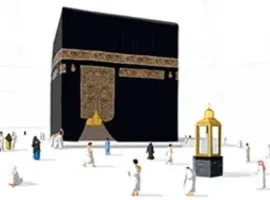
Maqam-e-Ibrahim is among the most sacred landmarks in Islam, located in Masjid al-Haram and connected to the legacy of Prophet Ibrahim (AS) and the blessed House of Allah, the Kaaba. The station of Ibrahim serves as a powerful reminder of obedience, devotion, and humility before Allah (SWT).
Maqām Ibrāhīm is the sacred stone upon which Prophet Ibrāhīm (AS) stood while constructing the Kaʿbah in obedience to the command of Allah (SWT). It is also mentioned in the Holy Qur’an, highlighting its significance for all pilgrims.
“And take the Maqam of Ibrahim as a place of prayer.” (Surah Al-Baqarah 2:125)
What Is Maqam-e-Ibrahim?
According to the majority of scholars, Maqam-e-Ibrahim is the stone upon which Prophet Ibrahim (AS) stood while constructing the Kaaba with his son, Prophet Ismail (AS). The stone softened beneath his foot by the will of Allah (SWT), leaving behind visible footprints that are preserved till today.
The stone is currently enclosed within a transparent protective structure near the Kaaba, allowing pilgrims to see it clearly while safeguarding it.
Historical Background
When Khalilullah, i.e., Prophet Ibrahim (AS), was commanded by Allah to build a place of worship, the Kaaba, the structure rose higher as construction progressed. The Prophet then stood upon this stone to build the upper part of the Kaaba, while Ismail (AS) helped him in passing the building materials.
As Ibrahim (AS) moved around the Kaaba, the stone miraculously carried his footprints; a lasting sign of Allah’s support and acceptance of his obedience.
This moment symbolizes complete submission to Allah (SWT) and trust in His command.
Location of Maqam-e-Ibrahim
Originally, Maqam-e-Ibrahim was adjacent to the sacred Kaaba. But over time, due to the increasing number of pilgrims, huge crowds, and for the ease of the Tawaf ritual, the stone was repositioned slightly further away. Maqam-e-Ibrahim is still in the sacred area of the great mosque, Masjid al-Haram.
The stone was moved to allow more space for pilgrims to perform the rituals of Hajj and Umrah. Today, Maqam-e-Ibrahim is enclosed in a glass and metal casing to protect it.
Significance of Maqam-e-Ibrahim During Hajj and Umrah
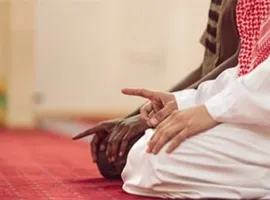
Maqam-e-Ibrahim is not just a place for reflection; it also holds special importance in the rituals of Hajj and Umrah. After completing the Tawaf rituals, Pilgrims are required to offer two Rak‘ahs of prayer behind Maqam-e-Ibrahim.
If the area is crowded, the prayer can be offered anywhere within Masjid al-Haram. The Prophet Muhammad ﷺ consistently observed this practice, establishing it as a Sunnah.
Etiquettes and Common Misconceptions
We all know that Maqam-e-Ibrahim is a sacred landmark, but Islam teaches moderation and adherence to Sunnah. There are certain things that pilgrims should remember related to Maqam-e-Ibrahim:
- Touching or kissing the glass enclosure is not prescribed
- Seeking blessings through physical contact has no basis in Sunnah
- Supplication should be directed to Allah alone
Respect, reflection, and prayer are the correct ways to honour the sacred Maqam-e-Ibrahim.
For the ummah, the stone stands as a timeless reminder that true honour lies in obedience to Allah and great acts of Ibadah are rooted in sincerity. Allah (SWT) supports those who submit fully to His commands without any doubt or hesitation.
Maqam-e-Ibrahim is more than a stone; it is a living testimony of devotion, sacrifice, and divine acceptance. The stone inspires millions of muslims to follow the path of sincerity and submission shown by Prophet Ibrahim (AS).

Recommended Hajj Tour

 7 Nights
(4 Nights)

(3 Nights)
 Flights
 Transfer
 Visa
Visa
 Breakfast
7 Nights
Breakfast
7 Nights 7 Nights
(4 Nights)
(3 Nights)
Flights
Transfer
Visa
Breakfast
7 Nights 7 Nights
(4 Nights)
(3 Nights)
Flights
Transfer
Visa
Breakfast
7 Nights
7 Nights(4 Nights)
(3 Nights)
Flights
Transfer
Visa
Breakfast
7 Nights