


Umrah Guide
Plan Your Tour
Ihram and Its Importance
Many pilgrims understand Ihram as the simple white clothing worn by male pilgrims during the Hajj and Umrah journey. However, in reality, Ihram is far more than clothing; it is a sacred state of discipline, devotion, and humility that the believers have to enter before beginning their rites of Umrah and Hajj.
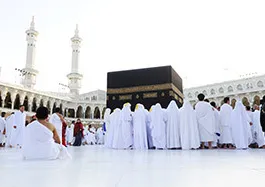
Entering into the state of Ihram marks the moment when a pilgrim consciously leaves behind worldly attachments, distractions, and distinctions. Clad in Ihram, millions of pilgrims gather in Masjid al-Haram, where differences of wealth, race, nationality, and status fade away. All stand equal before Allah (SWT), united by submission and sincere intention.
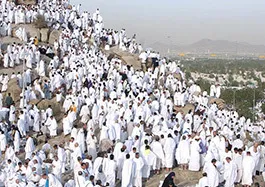
Pilgrims put aside their differences and gather under one religious umbrella to seek the rewards from the Almighty. The basic difference in clothing is put aside first. The uniformity of the dress establishes a collective identity of Muslims as a whole.
Wearing the Ihram is mandatory for every Muslim intending to perform Umrah. Through it, a pilgrim adopts simplicity, self-restraint, and spiritual awareness; qualities essential for a meaningful pilgrimage experience.
Ihram: A State Beyond Clothing
When one assumes the state of Ihram, there are some rules of Umrah that the pilgrims need to follow. Upon entering the Ihram, certain otherwise permissible (halal) actions become temporarily prohibited. These include:
- Wearing stitched clothing (for men)
- Applying perfume
- Cutting or removing hair
- Trimming nails
- Engaging in marital relations
These restrictions help cultivate patience, mindfulness, and self-control, reminding the pilgrim that Umrah is an act of ibadah, not a physical journey alone. Therefore, once a pilgrim decides to perform Umrah and form the intention, he must enter into the state of Ihram. This is the reason why the believers wear Ihram before embarking on their Hajj and Umrah journey.
Preparing To Enter Ihram
Performing Ghusl and Applying Perfume
Upon reaching the Miqat (site for entering the Ihram for Hajj and Umrah), pilgrims are recommended to have a bath and perfume themselves since that is what our Prophet Muhammad (pbuh) used to do. After reaching Miqat, the Prophet (pbuh) would remove his sewn clothes and have a bath to enter the state of Ihram.
It was reported by Aisha (RA), "I used to perfume the Messenger of Allah (peace be upon him), for his Ihram before (putting on the clothes of) Ihram, and on removing the state of Ihram before offering Tawaf (circumambulation of the Ka`bah)" (Al-Bukhari and Muslim
The Prophet (pbuh) also ordered Aisha (RA) when she was menstruating to take a bath and enter the state of Ihram. He also commanded Asma Bint Umays when she gave birth to a child, to clean herself and wear pads, and then to assume Ihram. Therefore, it is quite clear that women can enter Ihram during menstruation or postnatal bleeding after cleaning themselves and perform the rituals like other pilgrims except Tawaf around the Kaaba.
Trimming Nails And Removing Hair
Before assuming Ihram, it is recommended to trim the moustache, shave hair of the armpits, remove pubic hair and cut the nails. Pilgrims should do this to avoid removing hair during Ihram and because the Prophet (pbuh) commanded to take care of these things at all times.
It was reported by Abu Hurayrah (RA) that the Prophet (pbuh) said, "Five practices are characteristics of the Fitra (pure instinct): Circumcision, shaving the pubic hair, cutting the moustaches short, clipping the nails, and depilating the hair of the armpits." (Al-Bukhari and Muslim)
It was also related by Anas (RA) when he said, "The Prophet (peace be upon him) told us to cut the moustaches short, clip the nails, remove the hair under the armpits, and shave the pubic hair at least every forty days. (Sahih Muslim)
However, it is prohibited to either cut or trim the beard at any time. Rather, it should be allowed to grow, as it was narrated in the Hadith by Ibn `Umar (RA) that the Prophet (pbuh) said,
“Do the opposite of what the pagans do; keep the beards and cut the moustaches short."
Intention (Niyyah) For Ihram
After purifying the body and putting on the Ihram clothing, a person should silently form the intention of entering the state of Ihram for Umrah. The intention is the most important part of the rituals as Prophet (pbuh) said,
"(The rewards of) deeds are based on intentions, and every person will get the reward according to what they have intended."
It is also permissible to pronounce the intention followed by Talbiyah in a loud and clear voice. However, it is preferred to utter Talbiyah after getting in the car or any other mode of transport a pilgrim is using.
The Prophet (pbuh) pronounced the Talbiyah after settling on his camel and upon setting out from the Miqat.
How To Wear Ihram
For Men
Male pilgrims wear two unstitched white cloths:
- Izar – wrapped around the waist
- Rida – draped over the upper body
Footwear should leave the ankles and upper foot uncovered.
The Prophet ﷺ said: “A pilgrim should assume Ihram wearing an Izar, a Rida, and sandals.”
For Women
Women may wear modest stitched clothing of any colour, provided it does not resemble men’s attire.
However, while in Ihram:
- Face veils (niqab) and gloves are not permitted
The Prophet ﷺ explicitly forbade women from wearing face veils and gloves during Ihram.
Note: It is recommended to consult and seek an opinion from scholars on doubtful Islamic matters.


Recommended Hajj Tour

 7 Nights
(4 Nights)

(3 Nights)
 Flights
 Transfer
 Visa
Visa
 Breakfast
7 Nights
Breakfast
7 Nights 7 Nights
(4 Nights)
(3 Nights)
Flights
Transfer
Visa
Breakfast
7 Nights 7 Nights
(4 Nights)
(3 Nights)
Flights
Transfer
Visa
Breakfast
7 Nights
7 Nights(4 Nights)
(3 Nights)
Flights
Transfer
Visa
Breakfast
7 Nights